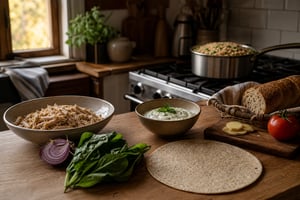
You already know what to do with the turkey leftovers. Nobody told you what to actually cook on...

Half a cabbage. Some paneer. Two tomatoes that need using. Curd that expires tomorrow. The work is not finding a recipe. The work is deciding what to cook before those ingredients rot in the drawer.
The real cost of food waste is not environmental guilt
The real cost of food waste is not environmental guilt. It is the rupees you spent on Wednesday that spoiled by Sunday. It is the half bunch of coriander rotting in the drawer because you bought it for one recipe and did not have a plan for the rest. It is the cabbage you meant to use, the tomatoes you were going to cook, the paneer that sat in the fridge while you ordered in three times that week.
Households waste nearly thirty percent of purchased food due to poor planning. That is not a moral failure. That is a system failure. You bought the ingredients with good intentions. You knew you should cook. Nobody told you what to actually make with what you already had before it went bad.
The advice exists. Use your leftovers. Plan your meals. Reduce waste. The hard part has never been knowing. The hard part is standing in front of an open fridge at seven in the evening, tired, looking at half a cabbage and some paneer and two tomatoes, and deciding what to cook before the delivery app decides for you.
Why search gives you options when you need a decision
You could search for recipes online. Millions of them exist. Type in cabbage paneer recipe and you will find four hundred thousand results. Filter by cook time, by cuisine, by rating. Scroll through twenty options. Read the comments. Check if you have the other ingredients. Realize you are missing garam masala. Consider a substitute. Scroll some more.
Search gives you options. Options at seven o'clock are not help. Options at seven o'clock are how you end up ordering in for the fourth time this week because making a decision when you are already tired is harder work than cooking itself.
That is the problem, not the solution. The gap is not between you and the recipe. The gap is between you and the decision about what to cook right now with what you already have. AnyFeast fills that gap. You tell the app what ingredients you have. It tells you what to cook. One decision, made before you get home, before you open the fridge, before the moment where good intentions collapse into takeaway.
What happens when your fridge becomes your meal plan
There is a feature in the app that sounds like a gimmick until you have used it. You take a photo of what is in your fridge. Half a cabbage. Some paneer. Two tomatoes that need using. Curd that expires tomorrow. The app looks at what you have, what you told it about your preferences and your constraints, and it tells you what to cook tonight.
Not a list of possibilities. Not ten recipes to compare. A single meal. Cabbage and paneer paratha with mint curd. Twenty minutes. Everything you need is already there. The curd gets used before it expires. The tomatoes go into the mint chutney. The cabbage does not rot in the drawer.
Small feature. It removes the exact moment where good intentions turn into takeaway. You do not need more recipes. You need someone to make the decision before you are too tired to make it yourself.
The difference between ingredient lists and cooking you will actually do
Every recipe you find online has an ingredient list. Some of them have twelve items. Some of them assume you have kasuri methi and sesame oil and black salt in your pantry. Some of them require a trip to the store for one ingredient you will use once and never touch again.
That is the difference between a recipe and cooking you will actually do. A recipe tells you what could be made. A plan tells you what to make with what you already have, in the time you actually have, for the people you are actually feeding.
AnyFeast builds the plan around your constraints, not around an ideal kitchen. You tell it what you will not eat, who you are cooking for, and how much time you have. It builds the week around what you can actually live with. Every recipe takes 20 to 30 minutes. Every meal comes with the prep time listed, so you know before you start whether tonight is the night for it. Sunday lunch is deliberately flexible. Eat out. Order something. A plan you cannot live with is not a plan, and the week that requires you to be perfect is the week you quit by Wednesday.
How twenty minutes and what you already have replaces ordering in
The work was never finding a recipe. The work is deciding, at seven in the evening, when you are tired, when there is half a cabbage and some paneer in the fridge, and when the delivery app is one tap away and already knows your address. That is the moment where meal planning fails. That is the moment where leftover ingredients become food waste. That is the moment AnyFeast is built for.
Twenty minutes. What you already have. One decision made for you before you walk in the door. That is how you cook this week instead of meaning to. That is how the cabbage gets used, the paneer does not expire, the tomatoes become part of dinner instead of part of the bin.
Everyone else is selling the advice. We are handling the Tuesday. We are making the decision at seven o'clock so you do not have to. We are turning what is in your fridge into what you actually cook before it rots in the drawer. That is the whole thing.