You already know what your family should be eating. The nutritionist said it. The doctor confirmed...
How to Build a PCOS Meal Plan for Working Women in 7 Steps (2026)
You already know what you should be eating. Your doctor said it. Your nutritionist wrote it down. More protein, more fibre, less refined carbs, smaller gaps between meals.
Nobody told you what to actually cook on Tuesday night when you get home at eight, the fridge has half a cabbage and some curd, and the ordering app is one tap away.
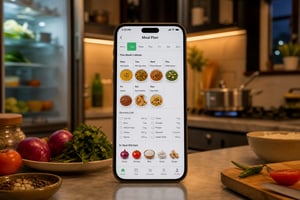
That is the gap. Seven plain steps to build a weekly PCOS meal plan that fits around a real Indian workweek, not an imaginary one. AnyFeast built its planning tools around exactly this problem. The logic below is the same: practical, repeatable, designed for the week you actually have.
Quick Guide: How to Build a PCOS Meal Plan in 7 Steps
- Write down your non-negotiables from your doctor or nutritionist. List the specific food rules your healthcare professional gave you so the plan starts from real guidance, not guesswork.
- Map your week around your busiest days. Mark late evenings and heavy workdays first so you know which nights need the fastest meals.
- Build simple Indian meals with protein, fibre, and shared ingredients. Pick 2 breakfasts and 3 lunch-dinner combos that reuse the same base ingredients across the week.
- Create a grocery list that matches the plan. Group items by how they appear in your meals so you buy only what the plan actually needs.
- Prep the parts that save you time later. Wash, chop, and portion once on a quieter day so weeknight cooking drops to 20 minutes.
- Make the plan flexible enough to survive a busy week. Keep one open meal slot and a backup option so a late meeting does not wreck the whole plan.
- Review what worked and adjust next week. Notice where the plan broke, change one thing, and carry the rest forward.
How to Build a Weekly PCOS Meal Plan That Fits Your Work Schedule
1. Write down your non-negotiables from your doctor or nutritionist
A word about health, because this matters and we would rather be plain about it. AnyFeast is not a treatment. If you are managing PCOS, your doctor and your nutritionist decide what you should be eating. That is their job and we are not going to pretend otherwise.
What we do is the part that comes after. The plan, the ingredients, the 25-minute dinner.
Write down the specific instructions your doctor or nutritionist already gave you. Not vague goals. The actual rules. "Include protein at every meal." "Reduce refined flour." "Eat every three to four hours."
Put those on a sticky note or in your phone. That list is your filter. If a recipe does not meet at least two of your non-negotiables, it does not go on the plan.
2. Map your week around your busiest days
Pull up your work calendar for next week. Mark the days you will get home after seven. Mark the morning meetings that kill breakfast time.
Those are your hard days. Those days get the fastest meals. Dal with brown rice, 20 minutes. Moong dal chilla from batter you prepped on Sunday, 10 minutes.
The easier days get the meals that need a bit more attention. A paneer sabzi with roti. Rajma that simmers while you change clothes.
Most plans fail because they treat every night the same. Tuesday at seven o'clock is not the same as Saturday afternoon.
3. Build simple Indian meals with protein, fibre, and shared ingredients
Pick two breakfasts you can repeat all week. Moong dal chilla with mint chutney works on Monday and again on Thursday. AnyFeast has paneer recipes that fit this same shared-ingredient approach. Poha with peanuts and vegetables works on the other days. Both take under 15 minutes.
For lunch and dinner, choose three combinations that share base ingredients. If you buy paneer, use it in palak paneer for Tuesday dinner and in a paneer paratha for Wednesday lunch. If you buy rajma, cook a larger batch and use it for Thursday lunch and Friday dinner with brown rice.
A 2025 cross-sectional study published in Reproductive Health found a 17.4% PCOS prevalence among young women in Delhi NCR, linked partly to urban dietary shifts. Shared ingredients keep your shopping list short and reduce waste. That half-bunch of coriander that usually rots in the drawer gets used across three dishes instead of one.
4. Create a grocery list that matches the plan
Do not write a grocery list from memory. Write it from the plan. Go meal by meal, list every ingredient, then combine duplicates.
Group the list by how you will use items, not by supermarket aisle. If paneer appears in two meals, write "paneer, 400g (palak paneer + paratha)" so you buy the right quantity the first time.
Buy for real life, not ideal life. If you know you skip breakfast on Fridays, do not buy breakfast ingredients for Friday. If you know you eat out on Sunday, leave Sunday off the list entirely. A plan you cannot live with is not a plan.
AnyFeast generates a smart grocery list from whatever meals you select, with exact quantities calculated so nothing sits unused. That removes the mental arithmetic and the overbuying.
5. Prep the parts that save you time later
Sunday evening. Thirty to forty minutes. That is all this takes.
Wash and chop the vegetables you will use through Wednesday. Portion the dal and rajma into containers. Make the chilla batter and refrigerate it.
The AnyFeast approach to pre-portioned ingredients follows the same principle: everything measured and ready before you start cooking.
Keep one backup meal ready for the night the plan falls apart. A batch of cooked brown rice in the fridge and a can of chickpeas means you are 15 minutes away from a chana rice bowl with cucumber raita, even on the worst Tuesday.
The goal is not perfection. The goal is that when you open the fridge at seven in the evening, the deciding is already done.
6. Make the plan flexible enough to survive a busy week
Leave one meal slot open each week. Wednesday dinner or Sunday lunch, whichever suits your schedule. That slot is deliberately flexible. Eat out. Order something. Use up whatever is left in the fridge.
The week that requires you to be perfect is the week you quit by Wednesday.
Reuse leftovers on purpose. If you made extra rajma on Thursday, that becomes Friday lunch with a roti and some salad. If there is leftover palak, stir it into a paratha filling. Planning for leftovers is not laziness. It is the plan working.
AnyFeast uses your fridge photo feature for exactly this. Photograph what is left. The app reads the ingredients and tells you what you can cook with them. Small feature. It removes the exact moment where good intentions turn into ordering in.
7. Review what worked and adjust next week
Friday evening or Saturday morning, spend five minutes reviewing the week. Notice where the plan broke. Maybe you skipped breakfast three times. Maybe the rajma took too long on a Tuesday.
Change one thing. Not everything. If breakfast failed, swap in something faster next week. If Tuesday dinner was too ambitious, move it to Saturday.
The plan improves one change at a time. AnyFeast tracks what you cook and what you skip, and its AI adjusts your next week's meal suggestions based on what actually happened rather than what was supposed to happen.
What Indian foods work for a PCOS-friendly weekly plan?
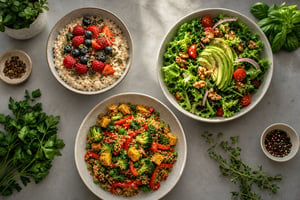
The base of a practical PCOS-friendly Indian meal plan is food your kitchen already knows. Dal, rajma, chole, paneer, eggs, chicken, and fish provide protein. Brown rice, jowar roti, and whole wheat roti provide complex carbs and fibre.
Vegetables like palak, lauki, bhindi, turai, and karela add fibre and volume without pushing the meal past 30 minutes of cooking time. Curd and raita serve as a side that adds protein and keeps meals filling.
Do not plan around recipes that need ingredients you cannot find near your house or that require 45 minutes of active cooking. The meals that survive a working week use five to seven ingredients and take 20 to 30 minutes from fridge to plate.
How do you keep a meal plan going when your work schedule changes every week?
Build the plan around categories, not fixed meals. Monday is not rajma day. Monday is a dal or legume night. If your schedule shifts, you still know the type of meal that slot needs. You pick whichever recipe fits the time you have.
Keep a rotation of five to six tested meals you know how to cook quickly. When a week gets unpredictable, you pull from that list instead of planning from scratch. You are never deciding from zero.
Batch-cook one protein dish and one grain on Sunday. Those two cover the base of multiple meals. If the week goes sideways, you still have cooked food in the fridge for two or three dinners.
How AnyFeast helps you build a PCOS meal plan that works on busy weeknights
AnyFeast removes the part that breaks most plans: the deciding. You tell the app what you are managing, who you are cooking for, and what you will not eat. It builds a weekly plan around those inputs, with every recipe taking 20 to 30 minutes and a grocery list that matches exactly.
The AI recipe recommendations learn from what you actually cook and skip, so the plan gets more practical each week. If you want professional guidance alongside the plan, AnyFeast Premium includes 45 minutes with Pritee, our nutritionist, every month. A real conversation with a person who looks at your plan and adjusts it based on your specific condition.
That is the whole idea. Not another app that gives you options at seven in the evening. A plan that has already done the deciding before you get home.
FAQs about PCOS meal planning for working women
Can I follow a PCOS meal plan with a typical Indian vegetarian kitchen?
Yes. Dal, rajma, chole, paneer, and curd give you protein. Brown rice, jowar, and bajra give you complex carbs. AnyFeast builds vegetarian meal plans using exactly these staples, adjusted to whatever your nutritionist recommended.
How much time does weekly meal prep actually take?
Roughly 30 to 40 minutes on a Sunday evening covers washing, chopping, portioning dal, and making chilla batter. That prep reduces most weeknight dinners to 20 minutes of active cooking.
What if I skip meals during a busy week?
It happens. Keep one backup meal in the fridge, like cooked brown rice and boiled chickpeas, so you can assemble a quick bowl in 15 minutes. AnyFeast accounts for skipped meals and adjusts your next plan so nothing goes to waste.
Do I need to count anything for a PCOS meal plan?
Not for this approach. The focus is on including protein and fibre at every meal and following the guidelines your doctor already gave you. AnyFeast shows you the nutritional breakdown of each recipe if you want it, but the plan works without tracking numbers.
How do I handle eating out while following the plan?
Leave one deliberate flexible slot per week for eating out or ordering in. That slot is part of the plan, not a failure. The rest of the week stays on track because you planned for the exception rather than pretending it would not happen.