Discover how AI-powered meal planning transforms solo cooking into an effortless, sustainable, and...
Diabetic Meal Plan for Busy Professionals in India (2026)
You already know what you should be eating. The doctor said it. The nutritionist printed it out. Cut the refined carbs. Add more protein. Watch the portion sizes.
Nobody told you what to actually cook on a Tuesday night when you get home at eight, the fridge has some paneer and half a bottle of curd, and the delivery app is already open on your phone.
That is the gap this article fills. A diabetic meal plan built for the way Indian professionals actually live their weekdays, with meals that take 20 to 30 minutes, use ingredients you already recognise, and do not require you to become a different person by Wednesday. AnyFeast builds meal plans around exactly this kind of constraint, using AI to handle the planning before you get home.
Key Takeaways: Diabetic Meal Plan for Busy Professionals
- A practical diabetic meal plan needs to solve the decision at seven in the evening, not just list what to eat.
- Eating protein and fibre before carbohydrates at every meal can reduce post-meal glucose spikes by over 40 percent.
- Weeknight cooking works when every recipe takes 20 to 30 minutes with familiar Indian ingredients.
- AnyFeast removes the weeknight planning burden by generating personalised weekly meal plans and shopping lists using AI.
- One flexible meal per week keeps the plan liveable so you do not quit by the second week.
Why Most Diabetic Meal Plans Fail on Weekdays
The advice is not the problem. There are thousands of diabetic meal charts available, each one correct in theory. The problem is that none of them account for the moment when the plan meets your actual Tuesday.
You left the office late. The traffic was bad. You are tired. The kitchen has some dal, a few tomatoes, and paneer that needs using tonight. The meal chart says grilled chicken with steamed vegetables. That is not happening.
A meal plan that does not fit your weekday routine is not a plan. It is a document you looked at once and forgot by the third evening.
Why the Plan Breaks Down After 7 PM
You have spent the entire day making decisions. Meetings. Deadlines. Approvals. By seven in the evening, the last thing you need is another choice. What to cook. What to buy. How long it will take.
That is exactly when ordering in wins. Not because you lack discipline. Because nobody removed the decision for you.
What a Workable Plan Actually Needs to Solve
Three things. First, the decision about what to cook must be made before you get home. Second, the ingredients need to already be in the kitchen. Third, the recipe needs to take under 30 minutes using things your family will eat.
If any one of those three is missing, the plan fails. Most meal charts only address one.
What a Diabetic Meal Plan Should Include
A working diabetic meal plan for an Indian professional is not a chart from a clinic wall. It is a weekly structure that accounts for your mornings, your commute, your kitchen, and the people you cook for.
How to Think About Protein, Fibre, and Meal Timing
Protein blunts the glucose response to carbohydrates. Fibre slows digestion. The order you eat them in matters. Research on Indian adults has shown that eating vegetables and protein before roti or rice can reduce post-meal glucose peaks by over 40 percent. The ICMR-INDIAB study, published in Nature Medicine, found that Indians get 62 percent of their energy from carbohydrates, with low protein intake across both vegetarian and non-vegetarian groups.
Start every meal with the sabzi or dal. Eat the roti or rice last. That single change costs nothing and works immediately.
Most Indian vegetarians consume roughly 40 to 50 grams of protein a day. For someone managing blood sugar, 70 to 80 grams is a more useful target. One bowl of cooked dal provides only 7 to 9 grams. Paneer, soy chunks, eggs, sattu, and curd need to fill the rest.
Which Foods Make Weeknight Planning Easier
Moong dal chilla takes 15 minutes and needs three ingredients. Quick Indian recipes that fit weeknight schedules do exist. Rajma cooks well from a pressure cooker in 20 minutes with pre-soaked beans. Paneer bhurji takes 10 minutes. These are not exotic recipes. They are weeknight-proof staples.
The ingredients that make weeknight cooking possible are the ones you already buy. Paneer. Curd. Tomatoes. Onions. Whole spices. Chana dal. The plan should work with what is already in your kitchen, not require a special trip to the store. That is how AnyFeast approaches recipe planning.
A Sample Diabetic Meal Plan for Busy Indian Professionals
Here is how a week works. Every meal follows the eating-order rule: vegetables or protein first, then carbohydrates. Every dinner takes 20 to 30 minutes. Grocery cost for a household sits at roughly 800 to 1,200 rupees a week.
Weekday Breakfast, Lunch, and Dinner Ideas
Monday: moong dal chilla with mint chutney for breakfast. Rajma with brown rice and cucumber raita for lunch. Palak paneer with one roti for dinner.
Tuesday: besan chilla with curd for breakfast. Chole with one small roti and salad for lunch. Bhindi sabzi with dal and one bajra roti for dinner.
Wednesday: paneer bhurji with multigrain toast for breakfast. Tofu sabzi with one khapli wheat roti for lunch. Moong dal khichdi with curd for dinner.
Thursday: poha with peanuts and soy chunks for breakfast. Chicken curry with one roti for lunch. Lauki chana dal with raita for dinner.
Friday: soy chunk upma with curd for breakfast. Dal makhani with brown rice and raita for lunch. Gobhi sabzi with masoor dal and one roti for dinner.
Each breakfast takes under 15 minutes. Each dinner, under 30. The shopping list overlaps across the week.
How to Keep One Flexible Meal in the Week
Sunday lunch is deliberately flexible. Eat out. Order something. Cook something slow if you feel like it.
A plan you cannot live with is not a plan, and the week that requires you to be perfect is the week you quit by Wednesday. One unstructured meal gives you room to live a normal life while staying consistent the rest of the time.
How AnyFeast Helps You Follow a Diabetic Meal Plan
The work was never finding a recipe. The work is deciding what to cook, at seven in the evening, when you are tired, when there is half a cabbage and some paneer in the fridge, and when the delivery app is one tap away and already knows your address.
AnyFeast handles that decision before you get home.
Using AI Planning to Reduce Decision Fatigue
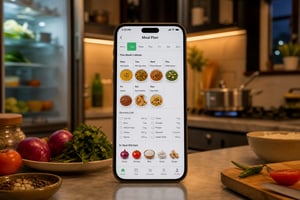
You tell AnyFeast what you are managing, who you are cooking for, and what you will not eat. The AI Recipe Kit takes it from there. The AI builds a personalised weekly meal plan with specific Indian recipes, prep times listed, and a consolidated shopping list. Every recipe takes 20 to 30 minutes.
The plan arrives before your week starts. The decisions are already made. You cook. That is the whole thing.
Turning What Is Already in Your Kitchen into Dinner
There is a feature that sounds like a gimmick until you have used it. Open the app. Photograph your fridge. AnyFeast reads what is there and tells you what you can cook with it.
Half a cabbage. Some paneer. Curd that expires tomorrow. With a photo it becomes dinner, and the curd gets used.
Small feature. It removes the exact moment where good intentions turn into ordering in.
A word about health, because this matters and we would rather be plain about it. AnyFeast is not a treatment. If you are managing type 2 diabetes, or a thyroid condition, your doctor and your nutritionist decide what you should be eating. That is their job and we are not going to pretend otherwise.
What AnyFeast does is the part that comes after. The plan, the shopping list, the 25-minute dinner on a Tuesday. That is the gap we fill.
In Conclusion: How a Practical Diabetic Meal Plan Changes Your Week
The hard part has never been knowing what to eat. The hard part is the Tuesday evening when you are tired and the fridge is half empty and the delivery app is right there.
A diabetic meal plan that works is not a chart on a wall. It is a system that makes the decisions before you get home, uses ingredients already in your kitchen, and takes under 30 minutes to cook. AnyFeast builds that system for you, personalised around your food, your household, and your week.
Everyone else is selling the advice. We are handling the Tuesday.
FAQs About Diabetic Meal Plans for Busy Professionals
Can a diabetic meal plan be quick to cook?
Yes. Most Indian meals suited for blood sugar management take 20 to 30 minutes. Moong dal chilla, paneer bhurji, and dal with sabzi are all under 30 minutes. AnyFeast generates weekly plans where every recipe lists the prep time, so you know before you start whether tonight is the night for it.
What should I cook when I am short on time?
Moong dal khichdi with curd and salad is a complete meal that takes under 25 minutes. Besan chilla with mint chutney takes 15. AnyFeast also has a fridge photo feature that reads what you have and suggests a meal you can cook right now, removing the decision entirely.
Is it possible to follow a diabetic meal plan with Indian food?
Indian food is well suited for managing blood sugar when the proportions are right. Dal, paneer, curd, sabzi, whole grain roti, and brown rice provide the protein, fibre, and complex carbohydrates needed. The key is eating the vegetables and protein before the carbohydrate at each meal.
How does eating order affect blood sugar?
Eating protein and vegetables before carbohydrates at each meal reduces glucose peaks by over 40 percent. For an Indian thali, that means starting with salad and sabzi, then eating dal or paneer, and eating roti or rice last. AnyFeast meal plans are structured with this eating-order principle built into every recipe sequence.
How much protein should a diabetic meal plan include?
Aim for 70 to 80 grams a day. Most Indian vegetarians currently consume 40 to 50 grams. Good sources include paneer, soy chunks, sattu, chana dal, eggs, and curd. AnyFeast personalises protein targets based on what you tell it about your health goals and household preferences.